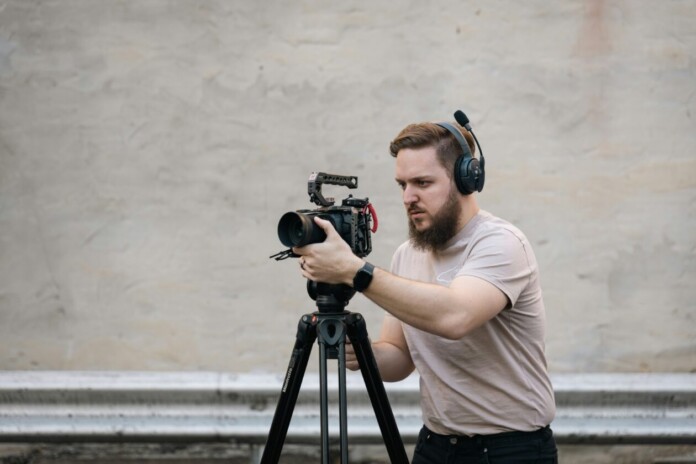
Photography today feels effortless compared to decades ago. Modern digital cameras offer advanced stabilization, lightning-fast shutter speeds, and excellent low-light capabilities. Many photographers rely solely on handheld shooting, believing that a tripod is unnecessary in this technological era. Yet, the tripod remains one of the most underrated tools in photography. It isn’t just about preventing shaky hands from spoiling your images — it opens creative doors that handheld shooting simply can’t match. Using one consistently can transform your workflow, refine your compositions, and elevate the technical quality of your shots.
1. Achieving rock-solid stability
Human hands are rarely still, especially when holding a camera with a heavy lens attached. Even the steadiest person can introduce slight vibrations, which become glaringly obvious in long exposures. When shooting fireworks exploding across the sky, city lights shimmering at night, or waterfalls cascading into silky streams, absolute stillness is required. Without a tripod, you risk blurring details and losing sharpness. A tripod provides that necessary anchor, letting your shutter remain open for seconds — or even minutes — without a hint of camera shake. This stability is what makes dramatic nighttime shots and dreamy motion effects possible.
2. Unlocking sharper, cleaner images
Sharpness is a hallmark of professional-looking photography. While fast shutter speeds can help freeze motion, they don’t guarantee maximum clarity, particularly when shooting at slower speeds or with telephoto lenses. With a tripod, you eliminate hand movement altogether. Combine that with a remote shutter release or your camera’s timer function, and you avoid even the subtle vibration of pressing the button. The result? Crisp, razor-sharp photographs where fine textures — like the veins of a leaf or the stars in the Milky Way — stand out in stunning detail.
3. Perfecting composition and panning
Photography isn’t only about sharpness — it’s about how you frame your subject. When shooting handheld, we often rush through our setup, snapping quickly before our hands tire. Using a tripod slows the process, giving you time to carefully refine your composition. You can straighten horizons, adjust framing with millimeter precision, or patiently wait for the right light or movement to enter the scene. For video work or panoramic photography, a tripod is even more crucial. Smooth panning across a landscape or stitching together multiple frames for a wide panorama is nearly impossible without that stable foundation. Some photographers even use tricks like attaching an elastic band to the tripod handle to achieve silky-smooth pans.
4. Essential for time-lapse photography
Few photographic techniques capture the passage of time as beautifully as timelapse sequences. Whether it’s a flower opening, clouds drifting across the sky, or the stars circling overhead, the effect relies entirely on consistency across hundreds — or even thousands — of shots. A single small shift in the camera position can ruin the illusion. A tripod guarantees perfect alignment from the first frame to the last, allowing you to weave those still images into a seamless, hypnotic video.
When to know you need a tripod
A helpful rule of thumb: your shutter speed should not be slower than the reciprocal of your lens’s focal length. For example, if you’re shooting with a 200 mm lens, your shutter speed should be 1/200 of a second or faster. Any slower, and the risk of blur increases dramatically. Whenever your settings fall outside that safe zone, it’s time to bring out the tripod. This applies to everything from handheld street photography to telephoto wildlife shots.
Beyond stability: creative advantages of a tripod
- Low-Light and Night Scenes: Instead of cranking up ISO and introducing grain, a tripod lets you keep ISO low while extending your exposure time. Your photos remain clean, sharp, and noise-free.
- Long-Exposure Magic: From light trails on highways to misty oceans or glowing cityscapes, long-exposure effects become possible only with a stable base.
- Macro Photography: Shooting close-ups magnifies even the smallest shake. A tripod makes focusing easier and helps maintain consistency across shots.
- HDR and Exposure Bracketing: To merge multiple exposures into a single balanced image, frames need to align perfectly—something only a tripod ensures.
- Panoramas and Stitching: Creating wide, sweeping views requires consistent alignment across multiple shots, which handheld shooting can’t provide.
- Filters and Creative Control: Neutral density (ND) filters extend exposure times, but using them handheld results in blur. With a tripod, you can experiment freely with these creative tools.
The mental shift a tripod creates
Interestingly, one of the greatest benefits of using a tripod isn’t technical — it’s psychological. The act of setting it up slows you down, forcing you to think more carefully about each shot. You become more deliberate in choosing your angle, adjusting your frame, and waiting for the decisive moment. This intentionality often leads to stronger compositions and more meaningful images. Many photographers report that using a tripod changes their relationship with photography itself, encouraging them to engage with subjects more thoughtfully.
Final thoughts: the quiet power of a tripod
It’s easy to think of a tripod as bulky or old-fashioned, especially when modern cameras offer image stabilization and high-ISO performance. But technology can’t replace the creative and technical freedom that a tripod brings. Whether you’re shooting landscapes, portraits, macro, or timelapses, this simple three-legged tool expands what’s possible in your photography. It delivers sharper results, enables advanced techniques, and invites you to slow down and craft images with greater care. In short: if you want to elevate your photos from good to exceptional, the tripod remains one of the smartest investments you can make.
 in Bahia.