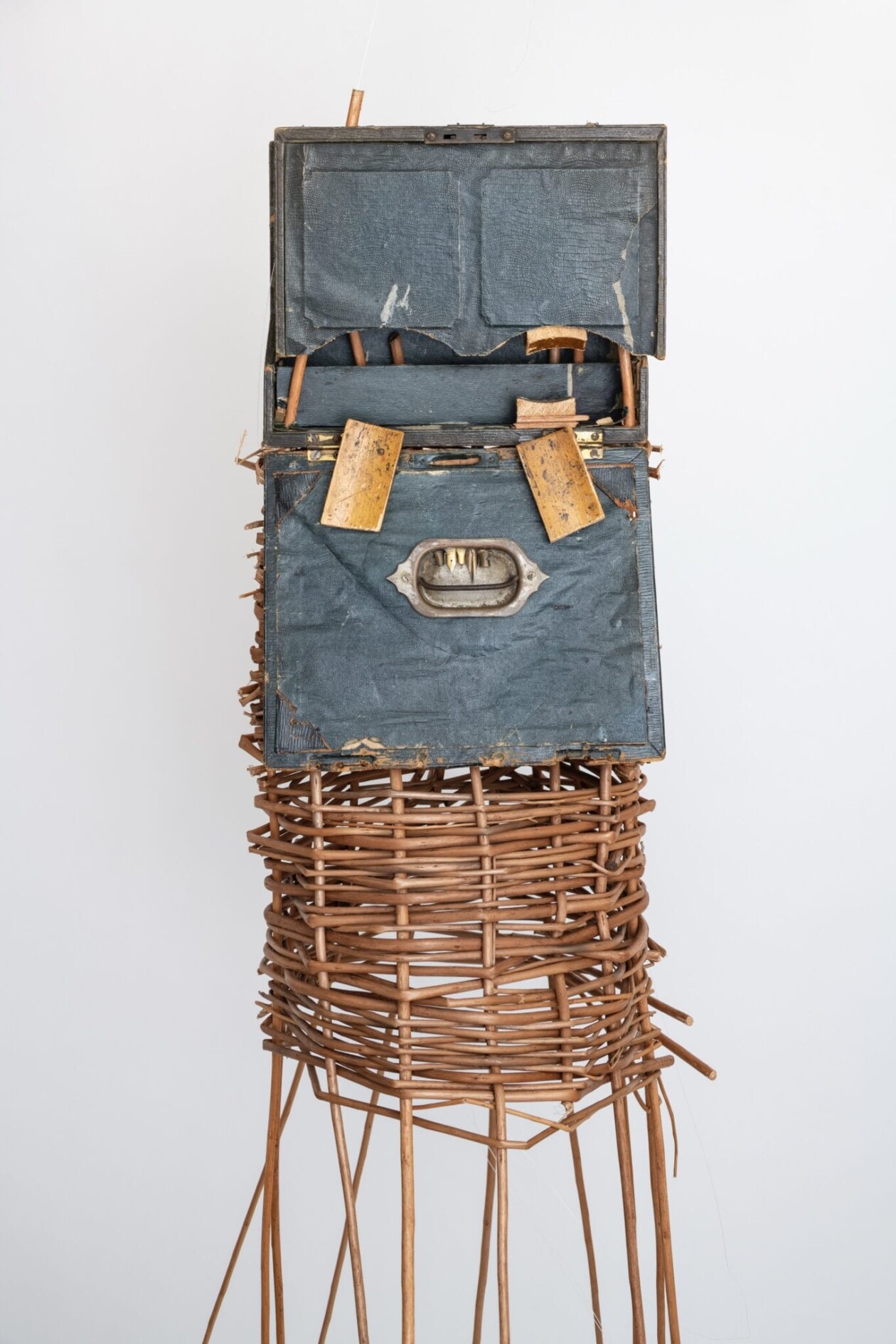
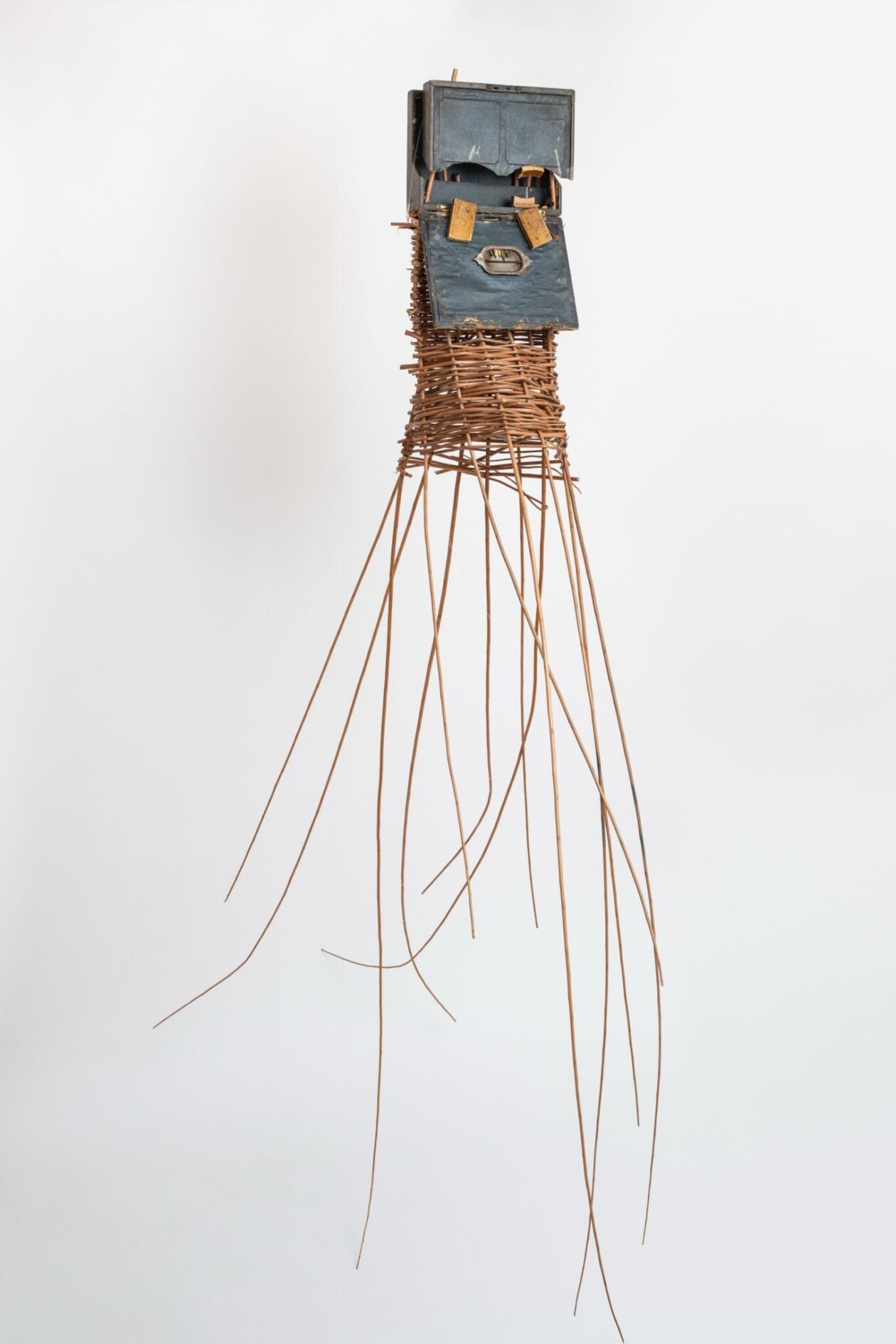
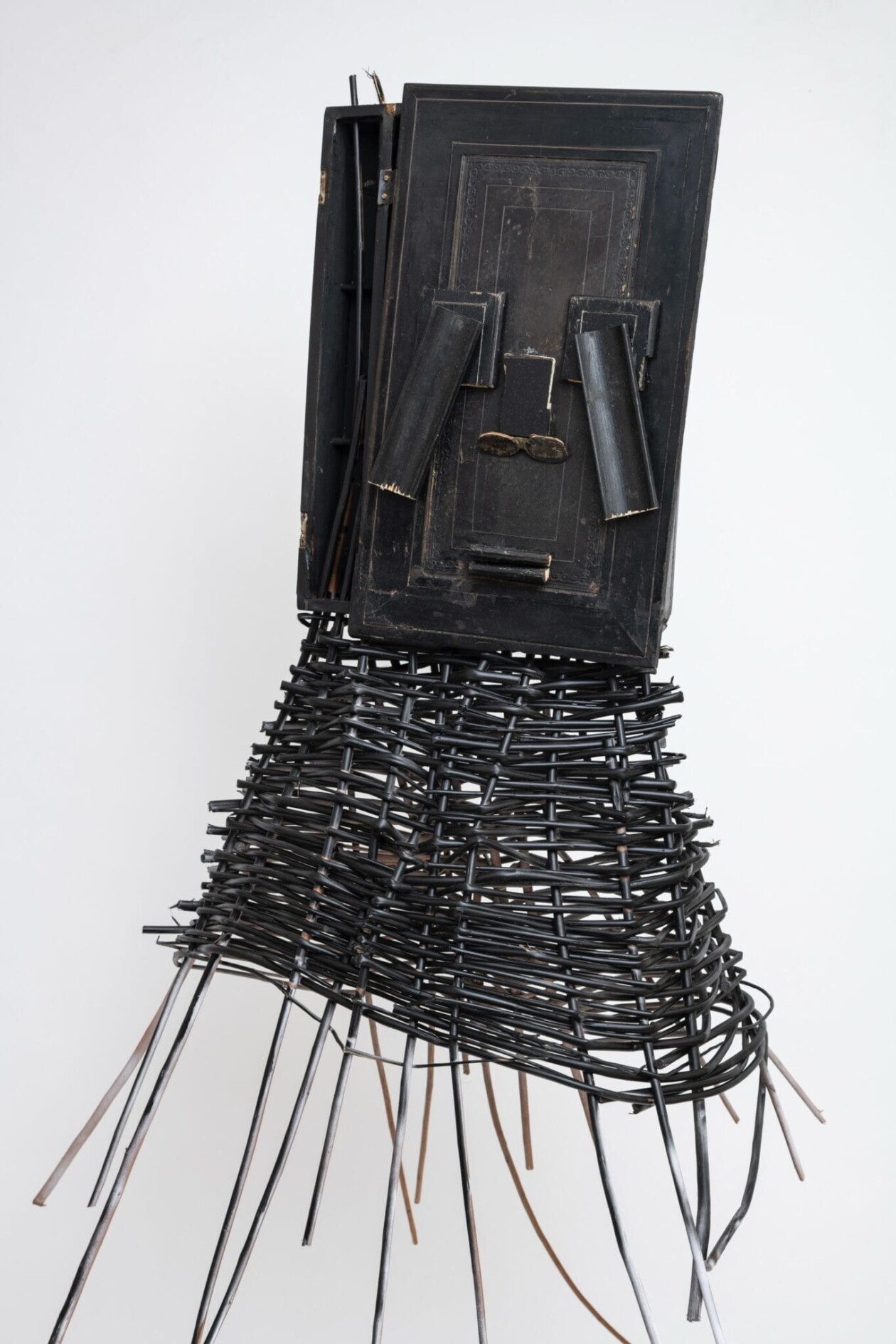
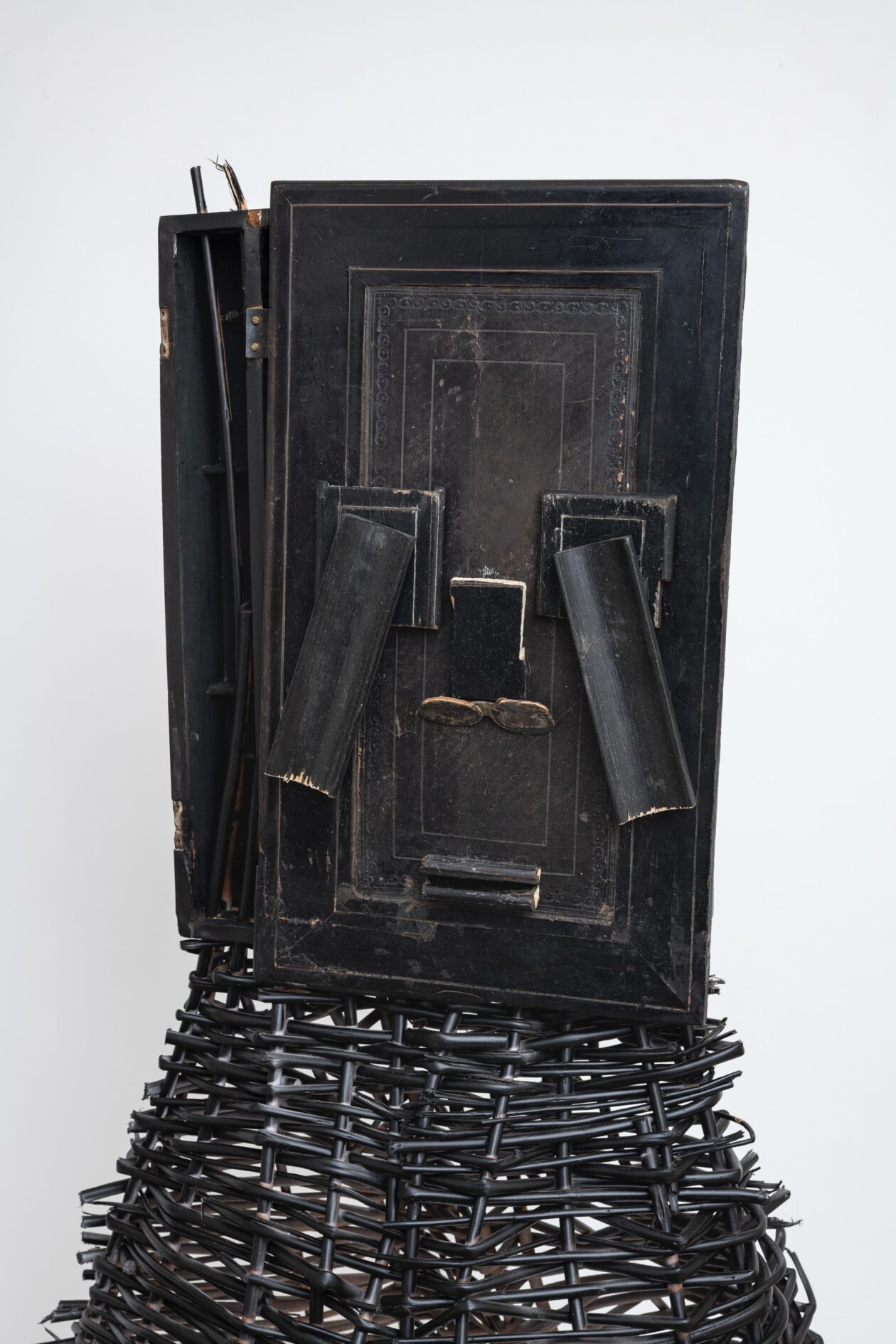
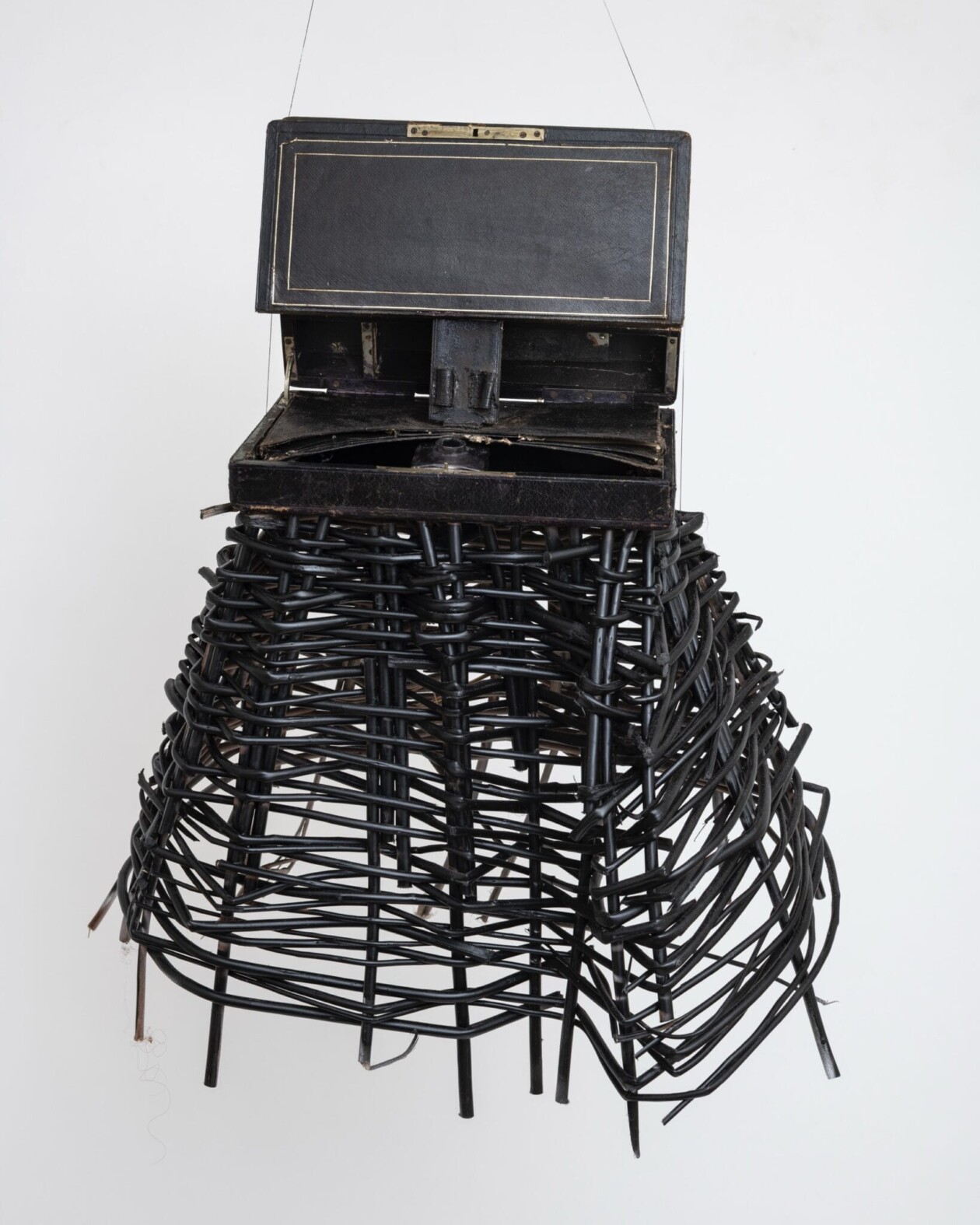
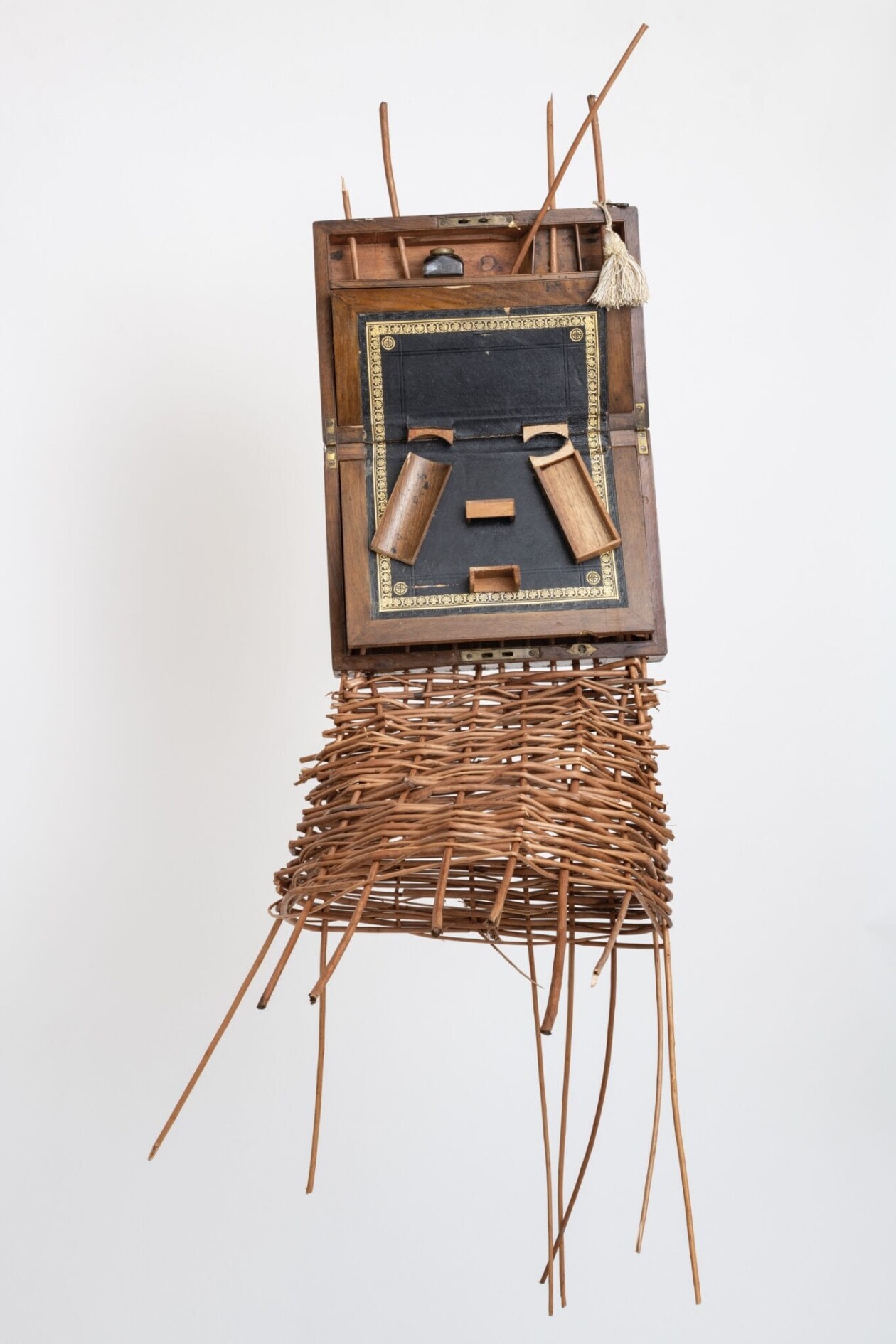
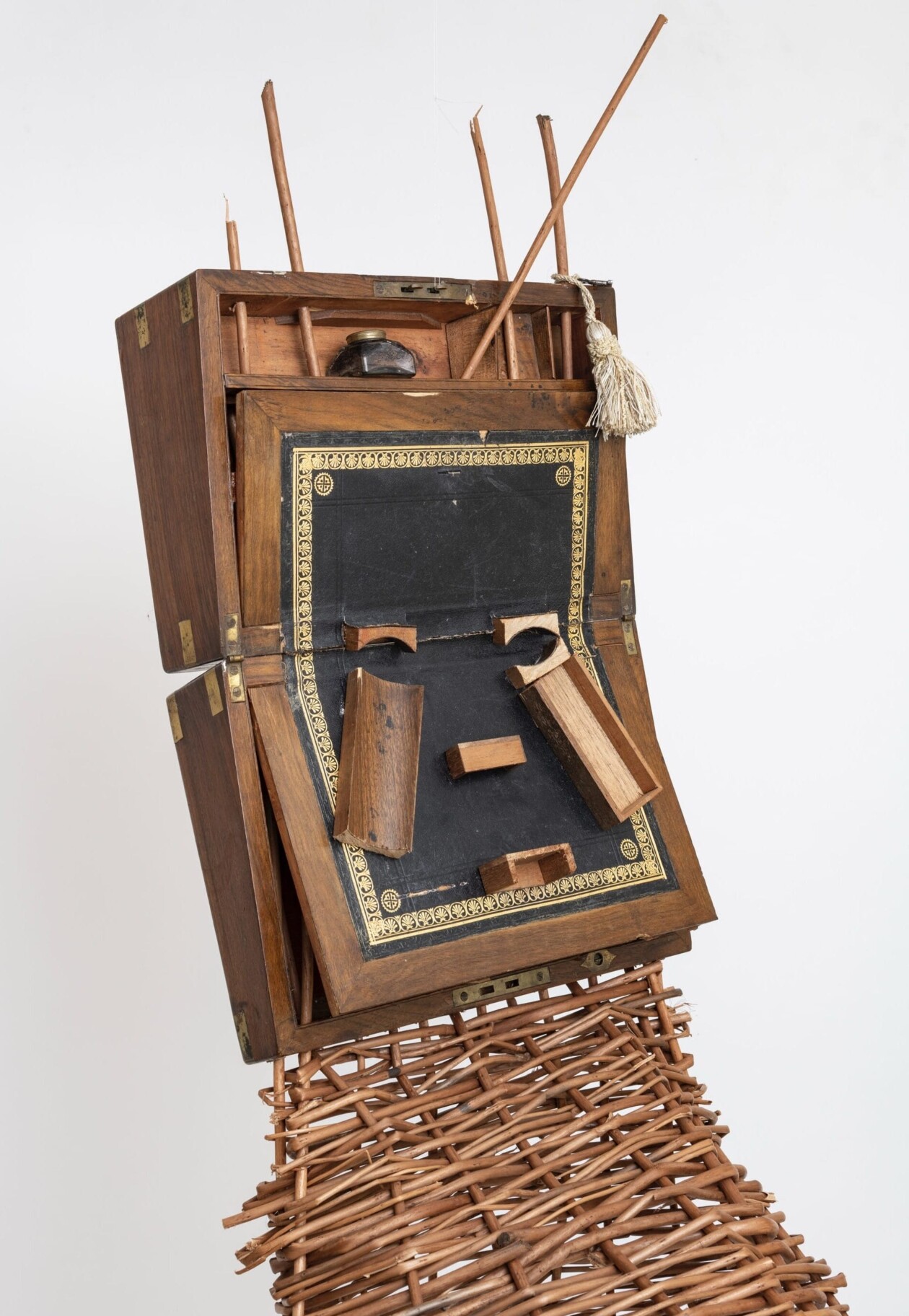
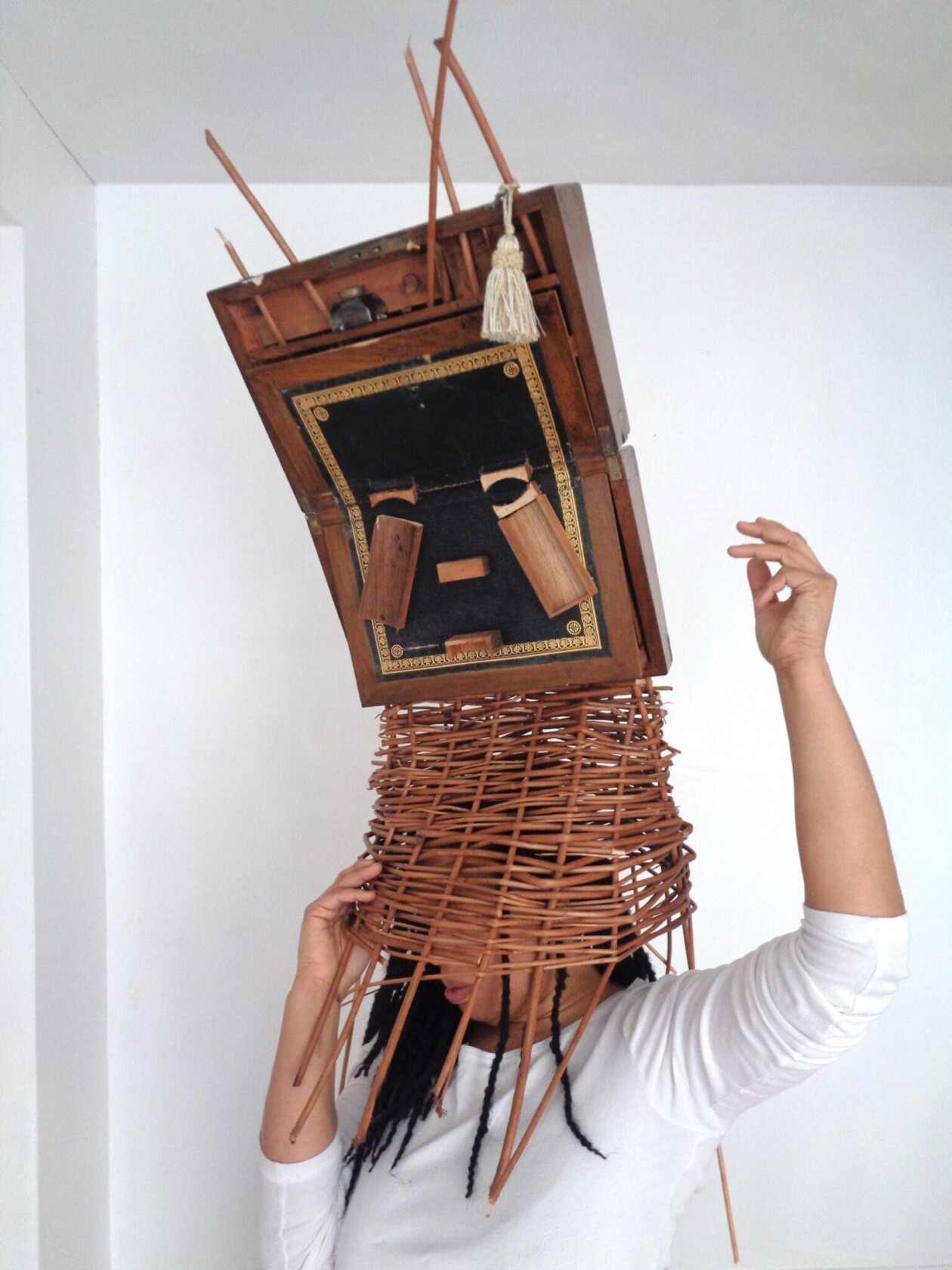
In her series of sculptures built from reclaimed Edwardian portable writing desks, Sonia E. Barrett stages a form of reversal and reclamation. The antique desks — mahogany, leather-inlaid, with compartments for pens and ink — were once instruments of colonial correspondence and archival accumulation. Barrett draws an explicit link between these desks and the letters sent from Africa back to Europe during the height of colonial extraction. By turning these desks into mask-like sculptures, she transforms objects of colonial bureaucracy into charged, anthropomorphic forms that reference the materiality of African ceremonial masks.
Barrett overlays or incorporates materials such as wicker, leather, ink, and found wood into the desks, often configuring them with face-like features and wearable elements — shoulder or body structures that allow the pieces to become seeming avatars or carriers. These sculptures operate across thresholds: they are furniture, they are masks, they are wearable ritual objects, and they are commentary. In doing so, Barrett connects the desks’ histories of extraction and superficial utility with African traditions of performance, transformation, and disguise. The mahogany used for the desks themselves shares an origin with colonial supply chains.
Beyond the material and formal aspects, Barrett cultivates a narrative of recovery. The desks that “wrote Africa” become sites for “writing back”, a process in which the artist reconfigures the archive of colonial power into objects that resonate with diasporic presence and memory. In situating these works on display — such as in a London exhibition at Messums London — Barrett invites consideration of how generations have processed colonised spaces, hidden lineages, and silenced material culture. The sculptures signal that objects carry embedded narratives far beyond their functional lifespan.
Ultimately, Barrett’s desk-mask sculptures provoke questions about value, inheritance, and transformation. They signal that the objects of empire may be reclaimed and recontextualised — turned from instruments of presence into embodiments of agency. Her work is tactile, resonant, sometimes unsettling, and undeniably rich in layered meaning. Through these pieces, the desks no longer simply record history; they engage in a new one — one shaped by repair, reflection, and reconnection. Some of Barrett’s sculptures are featured in The Ground Beneath: Material Memory and the Resilience of Hope, an exhibition at Messums London running through November 15.
More info: Website, Instagram.

 in Bahia.